Quilting Gallery
michele@quiltinggallery.com
http://QuiltingGallery.com/

Logo: Quilting Gallery

Inspiring quilters' creativity, sharing ideas, making connections and having fun.

Quilting Gallery Blog

Sweet Sewful Event

Helping someone else = a lovely give-away for you!

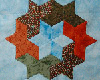
I read over on Erin Russek’s blog earlier this week, that’s she’s created this gorgeous dresden plate with appliqué pattern and all proceeds from sales are going to help a little girl, Miss Kyra, and her family in need from Erin’s local community.

miss-kyra

Erin is one of the most generous quilters I know and I wanted to lend some support too. I was very touched by Kyra’s story. So, I purchased six copies of Erin’s pattern, all proceeds are going to Kyra’s family. I’ll be keeping one pattern for myself and have five to give away here.

I don’t know about you, but I feel guilty that I don’t have the time in my life right now to offer more support to the wonderful quilting charities out there. So, when I see an opportunity that I can do a small part to help, I’m happy to do it.

Erin is selling her pattern for just $5.00… a steal if you ask me. You can find it in her Etsy Shop. I’d like to encourage you all to purchase the pattern and help support Kyra.

I have five copies to give-away. If you purchase the pattern yourself, awesome! Still enter my give-away. If you win a copy from me, give it away to one of your own blog readers or to a friend.

You don’t have to purchase Erin’s pattern to enter my give-away … it’s just a suggestion! To enter my give-away, leave a comment below telling me if do any charity quilting or help out others in your local community. Again, it’s not a requirement that you do charity work to win … I just love reading your stories.

Thanks to Erin for her generosity.. it’s quilters like her that make me smile and love the quilting community.

I’ll pick my five winners next Friday, March 16th.


Winners have been notified and sent the PDF pattern. Congratulations to:

#128 Inge Lise
#108 Jody
#78 Jodi G.
#30 Cheryl
#64 Ruth Robinson

Join the discussion: Leave a comment! - 131 comments so far

Posted: March 8th, 2012

Topics: Charity Quilting

Tags:

Getting Started: Basic Quilting Tools, Reference Books and Standard Quilt Sizes

The Learning Center - Hosted by Pat Sloan

Hi everyone! It’s Michele here for today’s Learning Center post with info on some basic quilting tools to get you started, a few reference books, a couple of inexpensive tool ideas and links to standard quilt sizes. As we explore the various techniques of quilting in upcoming posts this year, we’ll share tools and recommendations specifically related to those types of quilting.

Later this month, I’m also putting together a blog post with reader recommendations for “not so basic tools”. I’ve received several great ideas already. If you have a tool that you’d like to recommend, send me an email, a photo of the tool and/or a link to where it can be purchased and a couple of sentences why you like the tool. Don’t forget to include your name and a link to your own blog, if you have one.

Photos included below are for illustration purposes and not meant to represent me recommending one brand over another. That’s not the purpose of this post.


Basic Quilting Tools

Let’s face it, quilting can be expensive. If you’re just starting out it’ll be overwhelming the huge number of products available to us. Remember quilters of previous generations had a very small selection of tools and they produced such beautiful results. Some lovely fabric scraps, needle, thread, cardboard templates and scissors is all they had in their day.

Start small and build up your collection of tools as you need them. Buy the best quality you can afford at the time. Go to quilt shows to see the latest tools available and to try them out before buying. I try to avoid impulse buying and instead will watch a tool demo, walk away, and if I’m still thinking about it later, it’s time to back to the booth and get it. :)

Here’s what the quilter of our time will want in his/her toolbox:

  • Rotary cutter – the best time saving tool ever created
  • Self-healing cutting mat – must have to use the cutter
  • Rulers – to use with the above
  • Scissors
  • Seam ripper – yes unsewing is a part of the quilter’s life
  • Gorgeous fabric, threads, needles, sewing machine and an iron

The last item on my list we’ll explore later in March and April.

Rotary Cutters

Rotary cutters
I had a funny email exchange with Carrie Nelson last month when she shared with us her studio organization tips. She said …

As a friend likes to point out — you need multiple rotary cutters because one is always missing, one is always under the fabric, one is always in the “travel bag”, and one is always in the drawer where it is supposed to be. And that doesn’t include the one that needs its blade changed, or the one that always seems to turn up in the oddest place you can think of. That right there is six rotary cutters!

I called her the Queen of rotary cutters and asked her to send me a photo of her stash of cutters. Here’s what she had to say …

The frightening thing is these aren’t even ALL of my rotary cutters!

Please tell me you know how it is… even though it is a style or configuration you don’t use, no self-respecting quilter would get rid of a rotary cutter that still works! If nothing else, it might yield the last almost-sharp blade in the house! So I have the old ones I used all the time… all the collector Olfa’s that I either bought or was given… and then the quick-change cutters that are my favorite. I love those because of the shape of the handle ~ so comfortable.

By the way, you’ll probably notice that I tie ribbons to my rotary cutters. Just whatever is handy. I started doing that eons ago when I would take tools to class as a quick way to identify my rotary cutter in a sea of similar tools. I got used to seeing it so they look kind of nekkid when they don’t have a ribbon… but I’ve also found that the ribbon often makes the cutter easier to spot when it is under/partially covered by fabric or other stuff. So when the ribbon gets a little old and ratty-looking, I just switch it out without something new.

Rotary cutters come in several different sizes (18mm, 28mm, 45mm and 60mm), shapes, colours and configurations. Many companies make cutters including Olfa, Fiskars, Clover, June Tailor, Gingher and others. Some like the Grace Company make cutters that are meant to be more ergonomic and less stressful on the body, such as this one, My Comfort Cutter:

comfort cutters

For the beginner, I’d suggest getting the 45mm one, it’s the one you’ll use the most. If you can, try them out at a quilt store or show to pick one that feels nice in your hand. Cutters have come a long way over the years. In my stash, I have three cutters: two 45mm ones an old style and a newer style and a 28mm one. The old 45mm one is used strictly for batting or paper and always has a dull blade that I’ve transferred from the fabric cutting one. Don’t forget to pick up a pack of extra blades.

If you’re left-handed, you’ll definitely want to try out the cutter you’re thinking to buy or be sure to purchase one that states is if for left-handed users, such as this one from Olfa:

Self-healing Cutting Mats

cutting-mat

Like rotary cutters, cutting mats come in a wide variety of styles, configurations and sizes. The most important thing to remember when buying a cutting mat is to purchase one that is “self-healing”. I made the mistake when I first started out of getting one that wasn’t and it didn’t last long at all.

What size you choose will also depend on how much space you have available in your sewing room. I have two 24″x36″ mats (one for batting/paper only), a rotating mat (shown below), a mat ironing board combo (also shown) and a couple of tiny ones that are handy beside my sewing machine when paper-piecing. I covet one of the larger mats if only I had the space for one.

rotating-mat

mat-iron

Rulers

ruler

To go with your newly acquired mat and rotary cutter, you’ll need some rulers. Once again there are numerous companies that make rulers and many fabulous speciality rulers too. Best advice I can give when purchasing a ruler is to make sure that you can easily read the lines on the ruler. I have purchased a few that are impossible to read on any fabric colour. For the beginner, I’d suggest three basic sizes: 6.5″ square, 12″ square and a 6.5″x24.5″ long ruler.

Shown above is the 12.5″ square The Cutting Edge ruler that Pat Sloan designed and was developed by Sullivans. We’re giving away two 6.5″x24.5” rulers, see below for details.

Scissors

Even with a rotary cutter, you’ll still need some scissors. There are many to choose from and specialty scissors galore. Buy what you can afford for the task you are doing. I’d recommend a good pair for cutting fabrics, a pair for cutting paper, and a small pair for cutting threads.

I’m not sure how many I own, but I do have a nice collection. :) I found this Scissors Challenge on Flickr, and was surprised to see that it was something Pat did a couple of years ago. Yes, my collection is similar to these!

scissors

1. From Elise Fare, 2. IMG_1822, 3. IMG_1807, 4. scissors collection, 5. 43 Pairs of Scissors, 6. DSCN6995, 7. My Scissors, 8. A flower from Scissors, 9. my scissors collection

Seam Ripper

The seam ripper will be your best friend. Choose a good quality one with a small point at the end. You’ll be thankful for it.

seam-ripper


Reference Books

Here are a few reference books that you might want to add to your library:

Encyclopedia of quilting

jinny-beyer

beginner-quilting

Quilter's Academy


Mz Tool Lady

Pat’s friend Stevii Graves shares a few of her clever and inexpensive tool ideas. I’ll definitely be using the emery board trick real soon… why didn’t I think of that!

It is always fun to find quilty uses for non-quilty items.

Treat yourself to a pedicure. Dream about quilt designs as they massage your feet. To keep nail polish from getting on your toes a little foam separator is placed between your toes. Once the polish is dry the foam thing-a-ma-jig is removed. If anyone tries to throw away the foam thing, hit ‘em with your purse! Instead of your toes, put wound bobbins in the foam thing. The bobbins will be held tight and will not unwind. Its a great way to transport bobbins to a class or retreat.

Stevii tool 5

Deli paper can be found is big box stores, like Costco, and it’s intended use is to wrap sandwiches. Smart quilters know that it has better uses. It can be used to draw and trace patterns and as a stabilizer when sewing decorative stitches. It is also a perfect thing to protect your ironing board when fusing small pieces. Its not release paper, but can be a great protector for ironing board and iron. If you insist on using the deli paper for food, I’d recommend wrapping chocolate!

stevii tool 1

Drawing a diagonal line onto fabric and then sewing a 1/4″ seam allowance on either side of the line is a fabulous way to make half square triangles units. Instead of using a slippery ruler, use an emery board. It provides a straight edge to draw against and it will never slip around on the fabric.

emery board

Pin cushions are so much fun to make as gifts. To fill the pin cushions, take a trip to the pet supply store and buy a bag of reptile bedding to use as the filler. Reptile bedding is ground walnut shells, which machinists use in tumblers to polish metal. Your pins and needles will love being stuck in a pin cushion filled with reptile bedding. Use a kitchen funnel to pour the shells into the pin cushion.

reptile bedding

stevii pin cushion


Standard Quilt Sizes

American Patchwork and Quilting bed quilt

Our friends at American Patchwork & Quilting have an article about determining a quilt size
and a PDF document of the standard quilt and batting sizes. More info on sizes including table toppers is available at the Sewing/Needlework web site.


Give-Away

Long post … are you still with me?

ruler-give-away

The good folks at Sullivans are giving away two 6.5″x24.5″ The Cutting Edge rulers. See them in action YouTube videos. You can buy them in your local quilt shops or at Joann’s or Keepsake Quilting online.

To enter the give-away, in the comments below answer “What are your favourite ruler sizes?”. Two winners will be randomly selected March 15th.


Congratulations to the winners. Check your inbox for an email from me.

#6 Sandy A
#76 Dawn

Join the discussion: Leave a comment! - 122 comments so far

Posted: March 8th, 2012

Topics: The Learning Center

Fabric Collaged Artist Trading Cards (ATCs) – A Tutorial

The Learning Center - Hosted by Pat Sloan

Hi everyone, it’s your host Pat Sloan here today with a bonus tutorial for making Fabric Collaged Artist Trading Cards. Pokey Bolton of Quilts.com sent me this to share with you. You’ll recall that ATCs were featured in yesterday’s Quilting Types and Styles post.

Pokey Bolton Stitched pancakes

Materials for Fabric Collaged ATCs

Amounts below will yield approximately 9 ATCs

  • Fabric scraps
  • 9″ x 12″ piece of craft felt
  • 9″ x 12″ piece of fusible webbing
  • 9″ x 12″ piece of cardstock
  • Fabric glue
  • Rubber stamps or stencils
  • Fabric paint and foam brush
  • Embroidery threads and needle
  • Embellishments such as beads, buttons, and ephemera
  • Decorative trims if you would like to add borders to your ATCs
  • Fabric and craft scissors
  • Iron
  • Sewing machine
  • Rotary cutter, mat, and quilting ruler
  • Parchment paper or Teflon® sheet

Directions

  1. Fuse the fusible web to the craft felt following the manufacturer’s instructions.
  2. With the fusible side up, layer your fabric scraps on top until the felt is completely covered. Iron them in place.
  3. With fabric or acrylic paint and rubber stamps or stencils, add designs randomly over the fabric. Allow to dry, then heat-set. At this stage, you may want to add free-motion or decorative stitching all over to add interest.
  4. When the paint has dried and been heat-set, using your rotary cutter, ruler, and mat, cut 2 .5″ x 3 .5″ rectangles out of the fused fabric.
  5. Stitch and embellish each ATC as desired.
  6. Glue trims to the border or satin stitch all the way around.
  7. Glue on a cardstock backing, sign and date the card, and add contact information, if desired.

Inspiration

1. atc how does my garden grow, 2. altered art atc for trade, 3. Purple & Yellow ATC Challenge, 4. yellow nft, 5. BC atc swapbot, 6. Collected Leaves Series – ATC2, 7. Flowers Speak to Everyone, 8. Trade pending – Autumn Colours, 9. Lange latten – no.364

You’ll find ATCs everywhere. Start searching: Google images, Flickr groups, Pinterest and swapping too!

Michele will be here tomorrow with a new Learning Center post: Getting Started: Basic Quilting Tools, Reference Books and Standard Quilt Sizes. I’ll be back next week to talk about fabric styles and sewing machines.


Give-Away

Hop on over to my blog for a March Madness Give-Away from Westcott. Pink, purple, what’s your fave?

Westcott


Pat Sloan - The Voice of Quilting

Pat Sloan is owner and founder of the quilting design and publishing company Pat Sloan & Co. She has published over 25 books, more than 100 patterns, nearly 10 fabric lines, and has had her work featured in all the major Quilt magazines. In January 2010, Pat started hosting her weekly Internet Radio show called Creative Talk Radio.

Find Pat here:

Web Site | Blog | Radio Show | Facebook | Twitter
Quilt Forum | Pinterest | Newsletter

Join the discussion: Leave a comment! - 4 comments so far

Posted: March 7th, 2012

Topics: Free Projects, The Learning Center